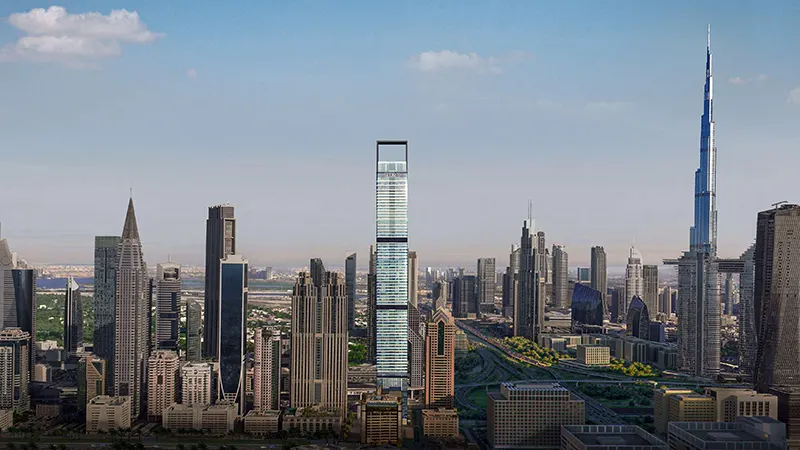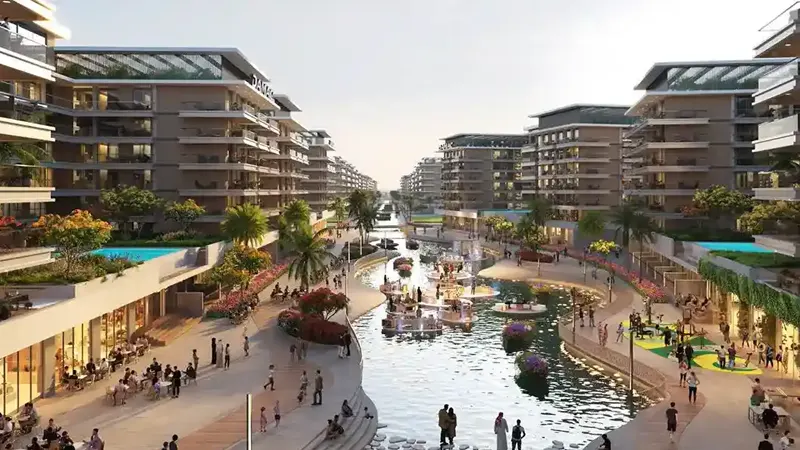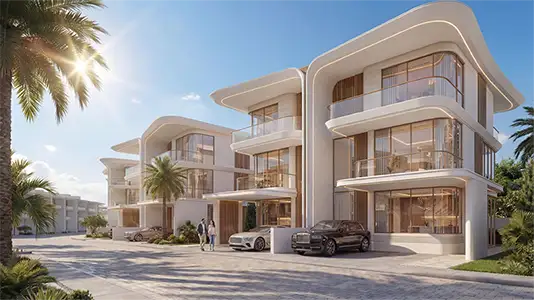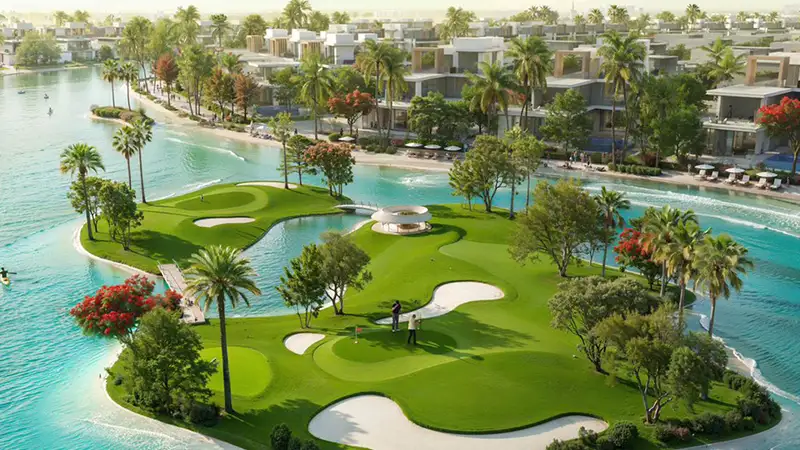
Dubai's luxury real estate market keeps defying predictions of a slowdown, and experts are more confident than ever that the current boom isn't a short-term trend. They see it as a sustainable cycle that should last through 2025.
Faisal Durrani, a partner and head of MENA research at a global property consultancy, says buying patterns point to a growing shift towards "genuine end users of real estate rather than speculative investors." In his view, that signals a steadier, longer-lasting market.
"Over the past 18-24 months, Dubai has emerged as the world's deepest market for $10 million-plus home sales, with high-net-worth individuals (HNWI) seeking prime luxury beachfront villas," Durrani told Business Recorder in a recent interview in Dubai.
Dubai Real Estate Strategy Aims for AED 1 Trillion Market by 2033
Over the last 12 months, Dubai has matched the number of $10 million home sales seen in London and New York combined, according to the recent Destination Dubai report. It shows how much the emirate's appeal has grown as a place to live, work and invest.
"This is a remarkable achievement for a market as young as Dubai," Durrani said, pointing to the strength and resilience of the city's real estate sector.
"While volatility is common in emerging markets, this cycle's fundamentals are far stronger than in previous years."
Defining Prime Property in Dubai
Prime residential real estate is a term that often needs explaining. Durrani says it usually means homes in the central business districts or close to them.
Dubai has five central business districts. To work out what counts as prime, researchers looked at every residential transaction over the past 22 years to find neighborhoods with consistently high-value sales. Right now, only four neighborhoods make the cut: Palm Jumeirah, Emirates Hills, Jumeirah Bay Island and Jumeirah Islands.
The Luxury Market's Continued Strength
To understand why Dubai's luxury market has done so well, you need to look at what's happened since the pandemic. The UAE's strong response, including becoming the world's most vaccinated nation, let Dubai reopen early and made it a refuge for people looking for a more stable place to live.
"Many buyers discovered firsthand the factors that make Dubai an attractive destination, including its safety, infrastructure, and lifestyle offerings," said Durrani.
Demand Outpaces Supply
One big reason the market stays strong is the gap between supply and demand. Home listings across Dubai are down 23% year-on-year, but the supply of luxury homes priced at $10 million or more has fallen by 50%.
"Developers are racing to meet the demand, and buyers are purchasing properties not to flip them but for personal use," Durrani explained.
The Destination Dubai report found that almost half (49%) of global ultra-high-net-worth individuals (UHNWI) with a personal net worth above $20 million plan to invest in UAE real estate in 2024. Another 30% are looking to buy over the next 2-5 years.
Dubai: The Global Magnet for Wealth
There's no denying Dubai's status as a global destination for the wealthy. In 2022, Indian billionaire Mukesh Ambani set a record when he bought a $163 million mansion on Palm Jumeirah. More recently, Brazilian football star Neymar Jr. picked up a $54 million penthouse in the Bugatti Residences by Binghatti.
The emirate's favorable tax regime, ease of doing business and expanding visa options, including the Golden Visa, have made it a magnet for international investors. Dubai's ongoing success mirrors the appeal of Monaco, a long-time favorite of the global elite.
Dubai is also working towards becoming the world's fourth-largest financial center, ahead of Hong Kong, according to the same research.
"The investments into the infrastructure, such as the $34 billion expansion of Al Maktoum International Airport, demonstrate the emirate's commitment to long-term growth," Durrani explained.
Growth of Prime Office Spaces and Business Sentiment
Dubai's commercial real estate market is growing strongly too. Demand for office space is at a record high, especially in prime locations, and vacancy rates are at historic lows. "There is a very real shortage of prime office space in the market, and much of the 4.2 million square feet of new office space coming over the next five years is already pre-leased," Durrani added.
Looking Ahead: Real Estate Growth Expected to Continue Through 2025
Dubai's real estate market has grown 20% year-on-year, and some areas have seen even bigger gains. Prices are now 6.5% above the 2014 peak, which reflects both a recovery and continued growth.
"We originally forecasted a 3.5% price growth for 2024, but current trends suggest we may see higher growth by the end of the year, carrying momentum into 2025," said Durrani.
The long-term outlook for Dubai is still positive. Favorable market conditions, steady demand from international buyers and strategic infrastructure spending all suggest Dubai's real estate boom is likely to carry on well into 2025.